


7 Mistakes You’re Making with Your Wheel Alignment (And How to Fix Them)
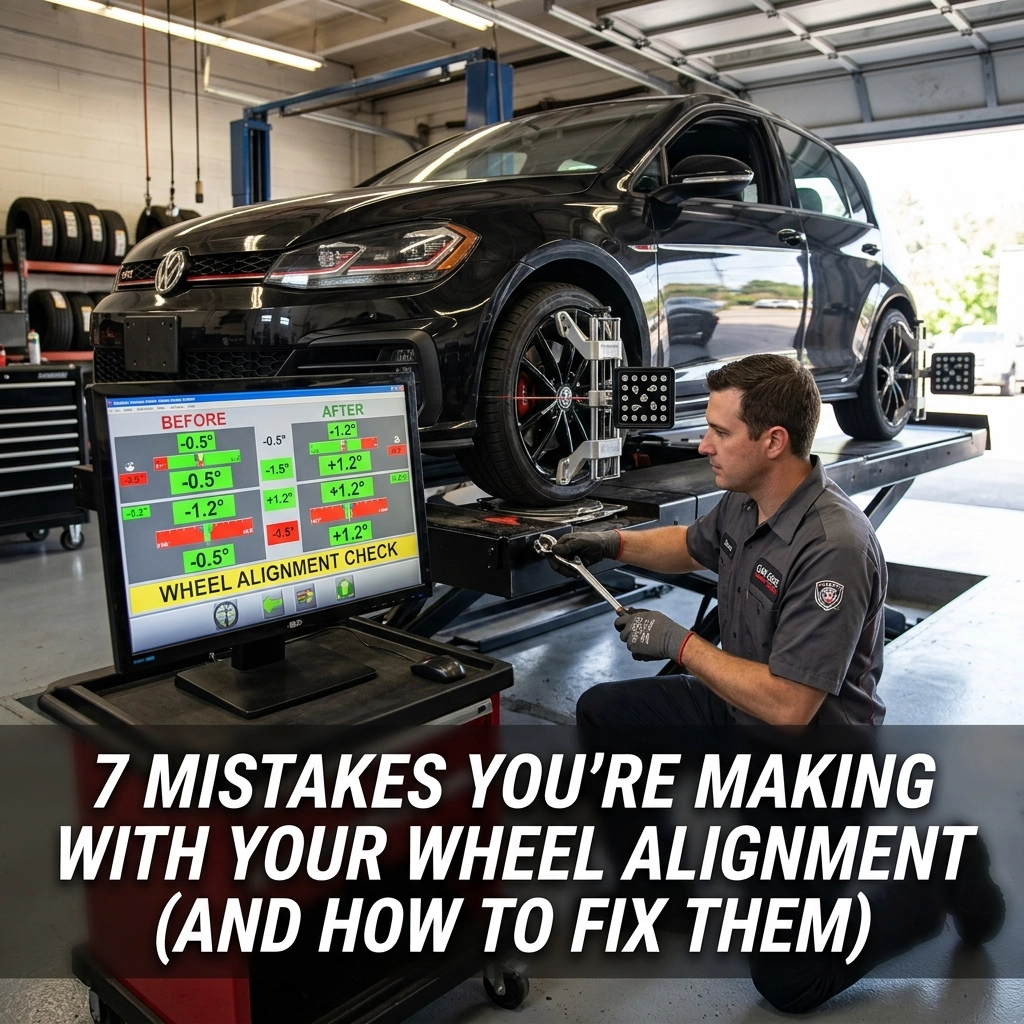
Have you ever pushed a shopping cart through a grocery store, only to find it has a stubborn mind of its own? No matter how hard you try to steer straight, it desperately wants to veer into the cereal aisle. Driving a vehicle with poor wheel alignment is exactly like that, but with much higher stakes. Instead of a minor annoyance in the produce section, you’re dealing with a multi-ton machine traveling at highway speeds through the beautiful: yet often rugged: terrain of Smithers, BC.
In northern BC, our vehicles take a beating. Between the frost heaves on Highway 16 and the hidden potholes that emerge as the snow melts, your suspension is constantly under fire. While most drivers realize that a “pulling” sensation means they need to see a car mechanic, many are making critical mistakes when it comes to maintaining their wheel alignment.
Here are the seven most common mistakes you might be making with your wheel alignment and, more importantly, how you can fix them to ensure a safer, more cost-effective drive.
1. Skipping the Pre-Alignment Inspection
The biggest mistake occurs before the alignment machine even touches your tires. Many drivers (and some less-thorough shops) jump straight to the adjustment phase without checking the health of the suspension.
Think of it this way: you wouldn’t try to straighten a picture frame if the nail holding it up was halfway out of the wall. If your ball joints, tie rod ends, or control arm bushings are worn out, any alignment adjustment made will be temporary. As soon as you hit a bump leaving the shop, the loose parts will shift, and your alignment will be out of whack all over again.
How to Fix It:
Before any alignment, a professional car mechanic should perform a “shakedown” of your front end. At Tatlow Tire 2024, we inspect for any play in the steering linkage or suspension. If parts are worn, they must be replaced first. Replacing a $50 bushing now saves you from paying for two alignments later.

2. Thinking Camber is Just for “Looks”
If you’ve seen sports cars with wheels tilted inward at an extreme angle, you’ve seen “camber.” While performance enthusiasts use it for cornering grip, for the average driver in Smithers, incorrect camber is a silent tire killer.
Camber refers to the inward or outward tilt of the tire when viewed from the front. If the top of the tire tilts inward (negative camber) or outward (positive camber) beyond manufacturer specs, your tire isn’t sitting flat on the road.
Why it Matters:
Incorrect camber causes “edge wear.” If you notice the inside edge of your tire is bald while the outside still has plenty of tread, your camber is likely off. This reduces your contact patch with the road, which is dangerous when navigating icy patches or wet roads around the Bulkley Valley.
How to Fix It:
Ensure your alignment technician uses computerized equipment to set your camber exactly to the manufacturer’s specifications. This ensures the weight of your vehicle is distributed evenly across the entire width of the tire.
3. Overlooking the “Toe” Alignment
“Toe” is often the most frequently misaligned setting. Imagine looking down at your own feet. If you point your toes toward each other, you are “toe-in.” If you point them away from each other, you are “toe-out.” Your car’s wheels do the same thing.
When your toe alignment is off, your tires aren’t rolling parallel to each other; they are essentially “scrubbing” sideways as you drive down the road. It’s like trying to run a marathon while wearing skis that are pointed slightly inward.
How to Fix It:
Toe alignment should be checked during every routine auto repair service. Even a slight deviation in toe can cause rapid, “feathered” wear on your tires, effectively cutting their lifespan in half. A professional adjustment ensures your wheels are pointing exactly where they should be.

4. Ignoring the Caster Angle
Caster is perhaps the most misunderstood part of a wheel alignment. Caster is the angle of your steering axis when viewed from the side. Think of the front wheels on a bicycle; the fork tilts back toward the rider. That tilt is “positive caster.”
While caster doesn’t typically cause tire wear, it has a massive impact on steering feel and stability. If your caster is off, your steering wheel might feel heavy, or the car might wander and feel “darty” at high speeds.
How to Fix It:
If your car feels unstable or the steering wheel doesn’t “return to center” easily after a turn, ask your mechanic specifically about the caster settings. Proper caster helps your car track straight, which is essential for long drives between Smithers and Terrace or Prince George.
5. Falling for the “DIY String Method”
We’ve all seen the YouTube tutorials. Someone with a ball of string and a tape measure claims they can align a truck in their driveway for free. While this might get you “close enough” to limp to a shop after a major repair, it is not a replacement for a professional alignment.
Modern vehicles are equipped with sophisticated Advanced Driver Assistance Systems (ADAS). Features like Lane Keep Assist and Electronic Stability Control rely on the steering angle sensor being perfectly synced with the physical alignment of the wheels. A string cannot measure angles to the thousandth of a degree.
How to Fix It:
Trust the technology. A modern tire shop uses lasers and high-resolution cameras to measure your alignment. This precision is what keeps your safety sensors working correctly and your tires wearing evenly.

6. Using Outdated or Uncalibrated Equipment
Not all alignment racks are created equal. An alignment is only as good as the machine performing the measurement. If a shop is using sensors that haven’t been calibrated in years, or equipment that was designed for cars from the 90s, your “aligned” car might still be crooked.
In a town like Smithers, where we drive everything from compact hybrids to heavy-duty 4×4 trucks, the equipment needs to be versatile and precisely maintained.
How to Fix It:
Don’t be afraid to ask your car mechanic about their equipment. Reliable shops, like Tatlow Tire 2024, invest in modern, regularly calibrated alignment systems to ensure that when we say your car is straight, it actually is.
7. Aligning Wheels Over Structural Damage
If you’ve recently been in a “fender bender” or hit a curb hard enough to bend a rim, your alignment issues might be more than just a simple adjustment. If the vehicle’s frame or a control arm is physically bent, the alignment machine might show “green” (in spec) on the screen, but the car will still drive poorly.
This is because the geometry of the suspension has been fundamentally changed. Trying to align a car with structural damage is like trying to put a square peg in a round hole: it might fit if you force it, but it’s never going to function correctly.
How to Fix It:
If you’ve had an impact, be honest with your technician. A thorough inspection can identify bent components that need replacement. Only once the structural integrity is restored can a proper alignment be achieved.

When Should You See a Mechanic?
At Tatlow Tire 2024, we recommend having your alignment checked at least once a year, or every 12,000 miles. However, living in Smithers means our conditions aren’t exactly “average.” You should book an appointment immediately if:
- Your steering wheel is crooked when driving straight.
- The vehicle pulls to one side consistently.
- You notice uneven or rapid tire wear.
- Your tires are “squealing” during low-speed turns.
- You’ve recently hit a significant pothole or curb.
Peace of Mind on the Road
Proper wheel alignment is about more than just saving money on tires: though it certainly does that. It’s about the safety of you and your family. A well-aligned vehicle handles better, stops shorter, and gets better fuel economy because there is less rolling resistance.
Don’t let these common mistakes compromise your drive. Whether you’re heading out for a weekend of camping or just commuting to work, ensure your vehicle is pointing in the right direction.
If you’re unsure about your vehicle’s alignment, come visit us at Tatlow Tire 2024. We’ve been serving the Smithers community with reliable automotive care, and we’re here to make sure your ride stays straight and true.
Contact us today to schedule your professional alignment and experience the difference that precision makes.