


Winter Tires vs. All-Seasons: Which Is Safer for Smithers Winters?
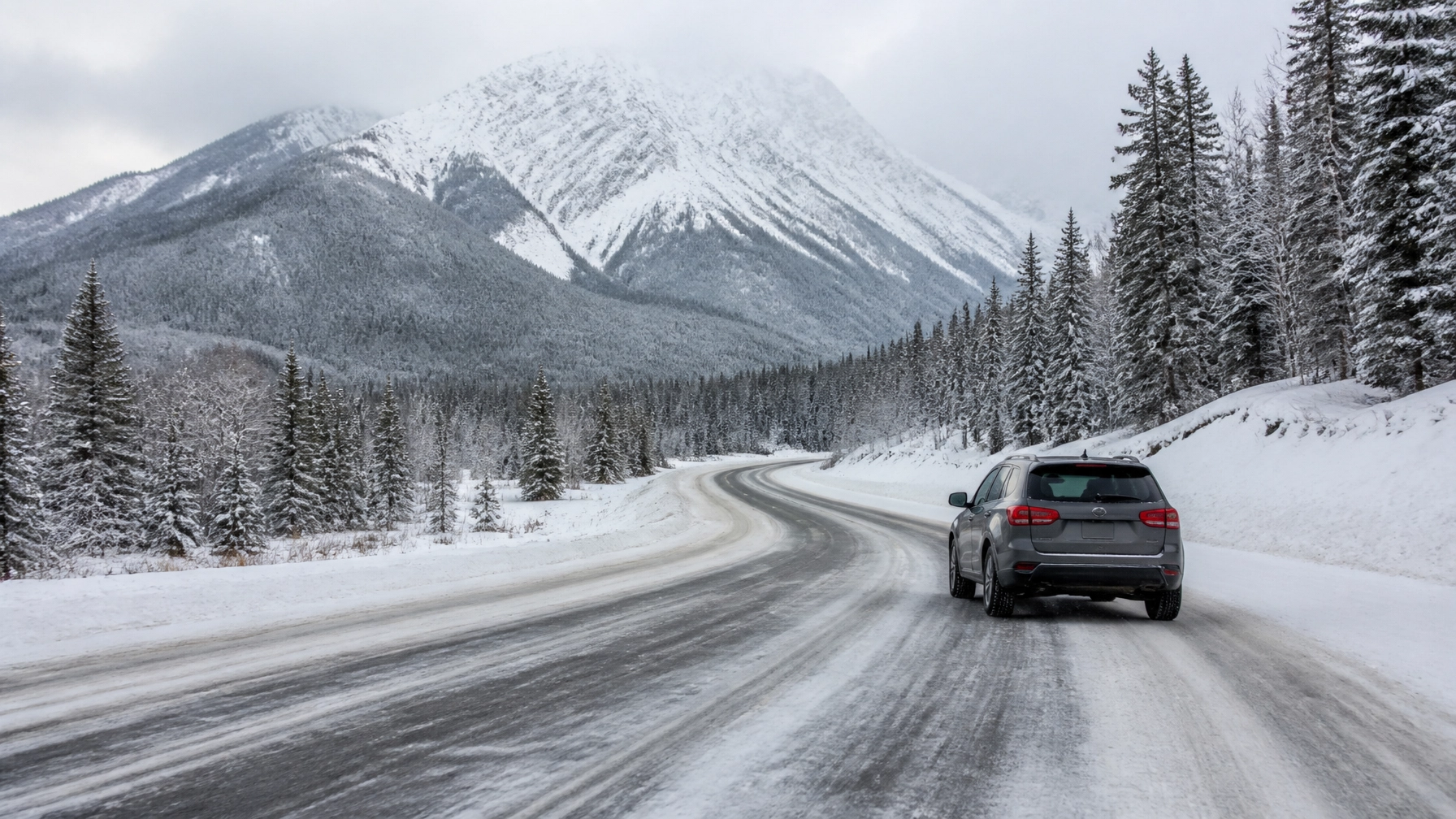
It is the end of July in the Bulkley Valley. You are likely more worried about the dust on your ATV or the temperature of the lake than the state of your tire treads. But as any long-time resident of Smithers knows, the window between “beautiful autumn” and “white-knuckle highway driving” is remarkably small.
By the time the first frost hits the windshield in September, our local tire shop is already buzzing. Why the early rush? Because in the Northern Interior, the choice between winter tires and all-season tires isn’t just a matter of preference: it is a matter of safety, physics, and provincial law.
When you are cruising down Highway 16 toward Telkwa or heading up to Hudson Bay Mountain, you need to know exactly how your rubber is going to react when you hit a patch of black ice. At Tatlow Tire 2024, we believe in giving you the honest truth about what keeps you on the road and what might leave you in a ditch.
The Legal Minimum vs. The Northern Reality
In British Columbia, the law is very specific. From October 1 to April 30, most highways in the North and Interior require winter-rated tires. If you are caught without them, you face fines, and more importantly, you risk your insurance coverage being called into question if an accident occurs.
The law technically allows two types of tires during this period:
- M+S (Mud + Snow): These are your standard all-season tires.
- 3PMSF (3-Peak Mountain Snowflake): These are dedicated winter or all-weather tires.
While both are “legal” as long as they have at least 3.5 mm of tread depth, there is a massive gap in how they actually perform in a Smithers winter. Relying on basic M+S all-seasons in our climate is like wearing a light windbreaker in a blizzard; it meets the legal definition of “clothing,” but it won’t keep you safe when the temperature drops to -20°C.
The 7-Degree Rule: Why All-Seasons Fail in the Cold
The biggest misconception we hear at the shop is that tires are all about the tread pattern. While tread is important, the real magic: or danger: is in the rubber compound itself.
Imagine a hockey puck and a pencil eraser. In the summer heat, both are somewhat pliable. But as the temperature drops, the hockey puck becomes a rock-hard projectile that slides effortlessly across the ice. The eraser, being made of softer material, maintains some “stickiness.”
Standard all-season tires are designed to handle everything from +30°C to roughly +7°C. Once the thermometer dips below 7°C, the rubber in an all-season tire begins to harden. This process, known as “vitrification,” turns your tires into four hard plastic rings with very little grip.
In contrast, dedicated winter tires are engineered with high silica content and specialized polymers that stay soft and flexible even at -30°C. This allows the tire to “wrap” itself around the microscopic imperfections in the road, providing the traction you need to accelerate and, more importantly, to stop.
Braking Distances: The Math of Safety
When a car mechanic talks about safety, we often look at the numbers. The difference in braking distance between a winter tire and an all-season tire isn’t measured in inches; it’s measured in vehicle lengths.
Data from the Traffic Injury Research Foundation and various BC health authorities shows that at temperatures below freezing, a vehicle equipped with winter tires can stop up to 30% to 40% shorter than one with all-seasons. To put that in perspective, if you are traveling at just 24 km/h on a snowy road, a winter tire could help you stop two full car lengths sooner.
In a town like Smithers, where deer frequently cross the road and sudden stops are common at intersections like Highway 16 and Main Street, those two car lengths are often the difference between a close call and a trip to the body shop.

Understanding Tread: Sipes, Slush, and Snow
If the rubber compound is the “heart” of the tire, the tread is the “teeth.” Winter tires feature much more aggressive tread patterns than all-seasons.
- Deep Grooves: These are designed to pump slush and water away from the contact patch, preventing hydroplaning.
- Sipes: If you look closely at a winter tire, you’ll see thousands of tiny slits in the tread blocks. These are called sipes. As the tire rolls, these sipes open up like little mouths, biting into the snow and ice to provide hundreds of extra edges for grip.
- Block Geometry: The blocks on a winter tire are designed to vibrate slightly as they move, which helps them “self-clean” by ejecting snow rather than letting it pack into the grooves.
If your tires aren’t effectively clearing snow, you are essentially driving on “slicks.” This is a common cause of car shakes at highway speeds, as snow imbalance can throw your wheels out of whack.
All-Weather vs. All-Season: What’s the Difference?
There is a relatively new category of tire that confuses many drivers: the All-Weather tire.
Unlike an All-Season tire (which is really a three-season tire), an All-Weather tire carries the 3-peak mountain snowflake symbol. This means it has passed the specific traction tests required for severe snow conditions.
For drivers who do mostly in-town driving and want to avoid the semi-annual tire swap, all-weather tires can be a viable option. However, for those of us living in the Bulkley Valley who deal with deep snow, mountain passes, and consistent sub-zero temperatures, a dedicated winter tire still reigns supreme. All-weather tires are a compromise; they aren’t as good as a summer tire in July, and they aren’t as good as a dedicated winter tire in January.
Why Prep in July?
It might feel strange to talk about winter bead leaks and rim corrosion while the sun is shining, but early preparation saves you money and stress.
- Inventory Choice: The best winter tire models often sell out by mid-October. By looking at your options now, you ensure you get the best brand for your specific vehicle and driving habits.
- Scheduling: Our shop fills up fast once the first snowflake falls. Booking your inspection or installation now means you won’t be stuck waiting in line when the roads get dangerous.
- Budgeting: Proper tire maintenance saves you money in the long run. Knowing now if you need a new set allows you to budget accordingly rather than facing a surprise expense in the fall.
The Professional Verdict
At Tatlow Tire 2024, our team: led by Sean, a certified Red Seal mechanic with over 14 years of experience: has seen it all. We’ve seen the “miracle” all-seasons that failed on a simple hill and the high-quality winter tires that kept a family safe during a whiteout on the Hungerford bypass.
The honest truth for Smithers drivers is this: All-season tires are a compromise that our winter doesn’t respect. If you value your safety and the safety of others on the road, dedicated winter tires with the 3-peak mountain snowflake symbol are the only way to go.
If you aren’t sure about the state of your current tires, don’t wait for the first skid. Check your tread depth today. If you need a hand, we can show you how to often you should rotate your tires or help you select a brand new set that fits your budget and your vehicle perfectly.
Stay Safe on Northern Roads
Winter in the Bulkley Valley is beautiful, but it demands respect. Don’t let your tires be the weak link in your vehicle’s safety chain. Whether you’re driving a compact car, a heavy-duty truck, or managing a commercial fleet, the right rubber makes all the difference.
Ready to get ahead of the winter rush? Contact Tatlow Tire 2024 today at our Smithers shop. We’ll help you choose the right winter tires and ensure they are mounted and balanced professionally, so you can face the coming season with confidence.